
Most people only encounter cacao once it is neatly wrapped in shiny foil, ready to melt on your tongue and lift your mood. But that chocolate bar had a very different beginning. The story starts with a tree that is more particular about its climate than a house cat.
Her name is Theobroma cacaoIts botanical name is Theobroma cacao, which literally means “food of the gods.” It may sound a little exaggerated, but once you have tasted truly good cacao, you understand immediately. We simply call it the chocolate tree.It grows only within a narrow belt around the equator, about 20 degrees north or south. That is where it feels at home. Sun? More than enough. Rain? In abundance. The chocolate tree loves it hot, humid, and slightly chaotic. Tropical intensity is exactly its element.Most people only encounter cacao once it is neatly wrapped in shiny foil, ready to melt on your tongue and lift your mood. But that chocolate bar had a very different beginning. The story starts with a tree that is more particular about its climate than a house cat.
Not a Great Sun Worshipper
Before you picture endless fields of cacao trees under a bright blue sky, pause for a moment. These trees are not sun lovers. They actually prefer plenty of shade. In their natural habitat, they grow beneath a canopy of taller trees. Think of it as a tropical umbrella.That canopy does more than protect the tree. It keeps the soil moist, the air humid, and creates space for all kinds of small life. Cacao never stands alone. It thrives in rich biodiversity.
That is also why monoculture cacao plantations often struggle. When you remove the shade and the diversity, you put stress on the tree, and a stressed cacao tree is not generous with its pods.
The Quiet Bloomers
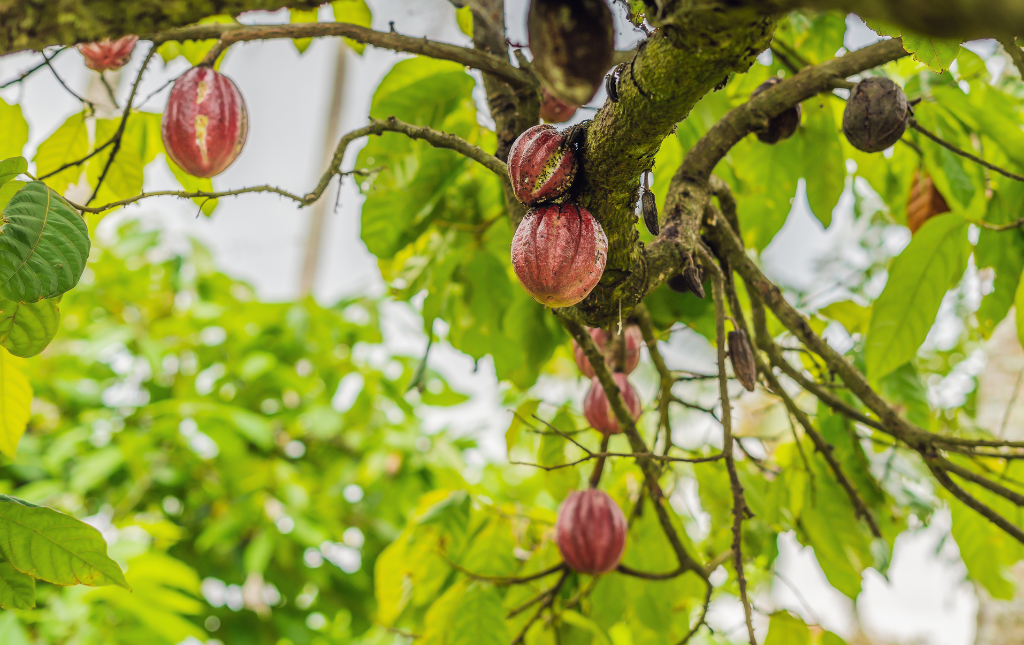
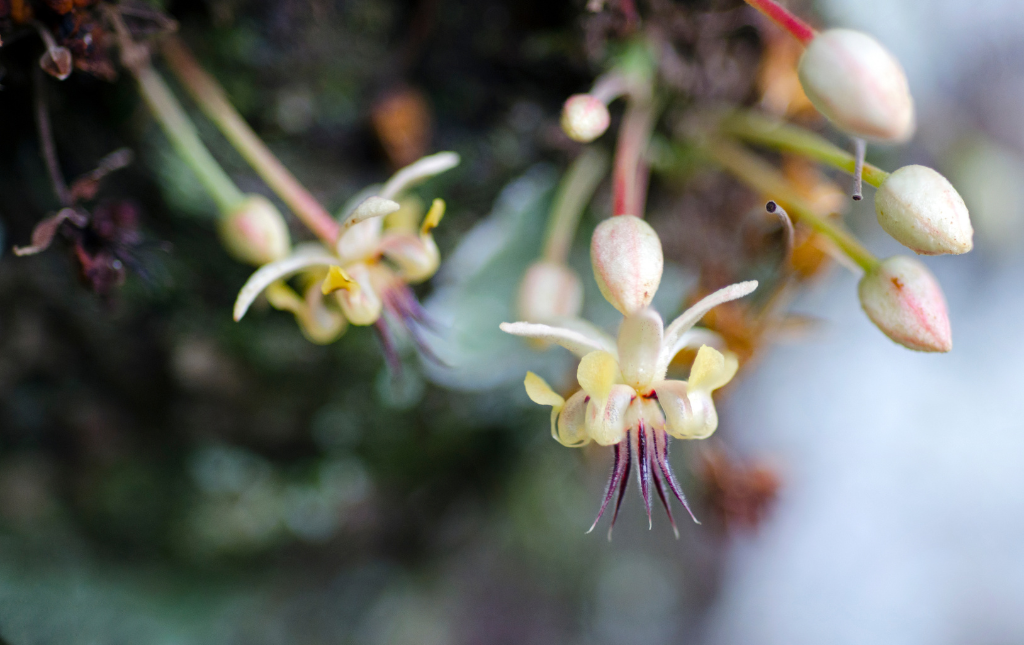
The flowers of the cacao tree are small and appear in surprising colors: white, pink, and yellow. They grow directly from the trunk and thicker branches, botanists call this cauliflory, we simply call it a brilliant move by nature.Here in Bali, the flowers do not bloom all year round. They appear as the rainy season fades, and the harvest peaks somewhere between May and November. So yes, even cacao has its rhythms, at least in this part of the world.
Even then, not every flower makes it to the finish line. Of the thousands that appear, only a few turn into pods. The rest? Quiet auditions. That is how selective nature can be.
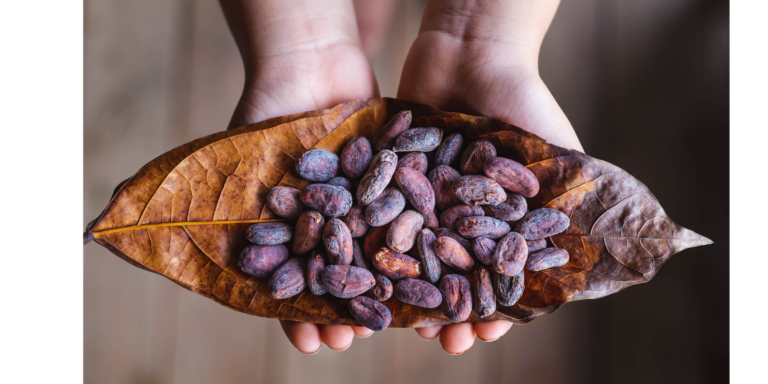
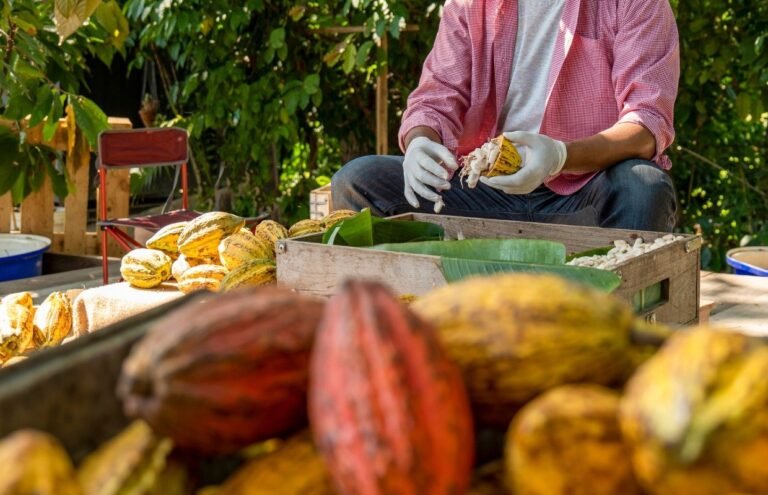
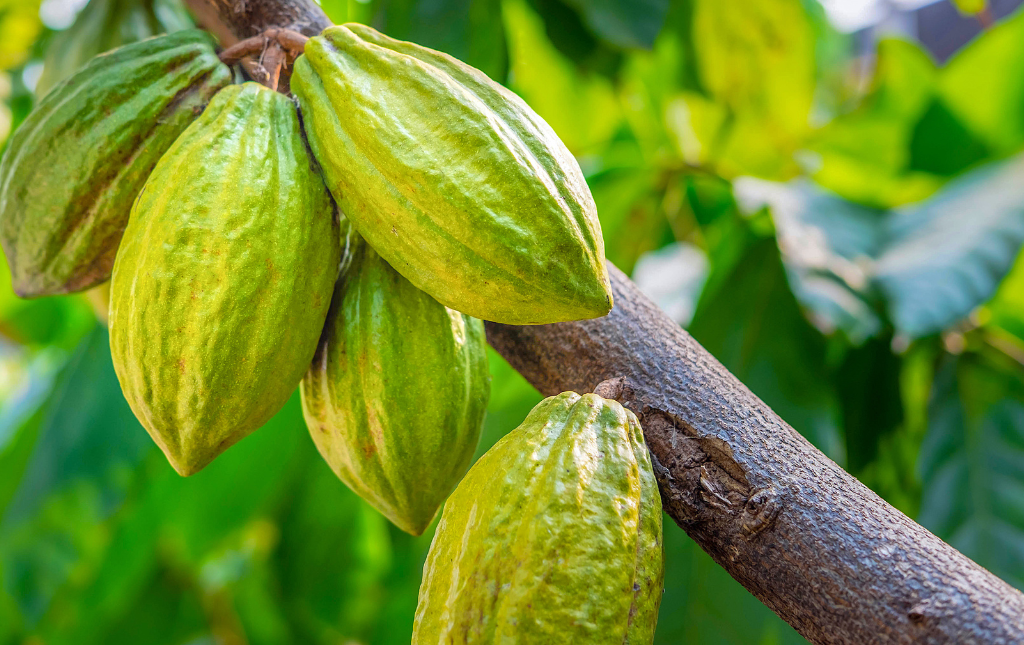
But when one does grow, it becomes a thick-skinned pod, shaped like a rugby ball and just as colorful, in shades of yellow, orange, red, and even deep purple. Inside that pod? Around 40 to 50 cacao beans, wrapped in sweet white pulp that smells like tropical candy.That is where it all begins. From those beans, your cacao and your chocolate bar are made.
Growing Cacao with Wisdom and Care
Cacao farming is not plug and play. It takes experience, timing, and a trained eye. Farmers know exactly when a pod is ripe, not only by its color, because that varies by variety, but by subtle signals: a slight change in tone beneath the skin, a faint movement of the beans when the pod is shaken, or a certain firmness you only learn to recognize over time.Harvesting is done by hand, carefully, with a sharp knife or a sickle, often while balancing on uneven ground.
The trees themselves also need to be pruned. If left to grow wild, they shoot up too high to harvest. So farmers trim them low and wide to keep the pods within reach. Smart and sustainable.
And although cacao trees can technically live up to 100 years, most of their productive life takes place within the first 4 to 20 years. After that, yields decline and younger trees take over. Like athletes, they peak early.
The Bigger Picture
So the next time you stir your cacao drink or break off a piece of your favorite bar, take a moment to remember this: that flavor comes from a tree with a complicated love life, growing in a chaotic tropical forest, cared for by hands that know exactly what they are doing.Every bite carries a story of climate, tradition, hard work, and a touch of botanical magic.
Cacao is not just an ingredient. It is an entire ecosystem, a culture, and for many small farmers, a livelihood. It all begins with a single tree, deep in the tropics, quietly doing its work far from the spotlight.
And now you know: chocolate is not just pleasure. It is rooted in something real.